
STORY · ECHOES OF THE PALACE TABLE
Charcoal and moon, the palace table
Sooti — a regional Korean word for charcoal. Moon — from the old root of the word, a night lit bright. The harmony of the two is where SUTIMOON begins.
Sooti means charcoal; moon, the bright night. 古宮珍宴 — the story SUTIMOON draws from the palace table, and why it cooks over charcoal.
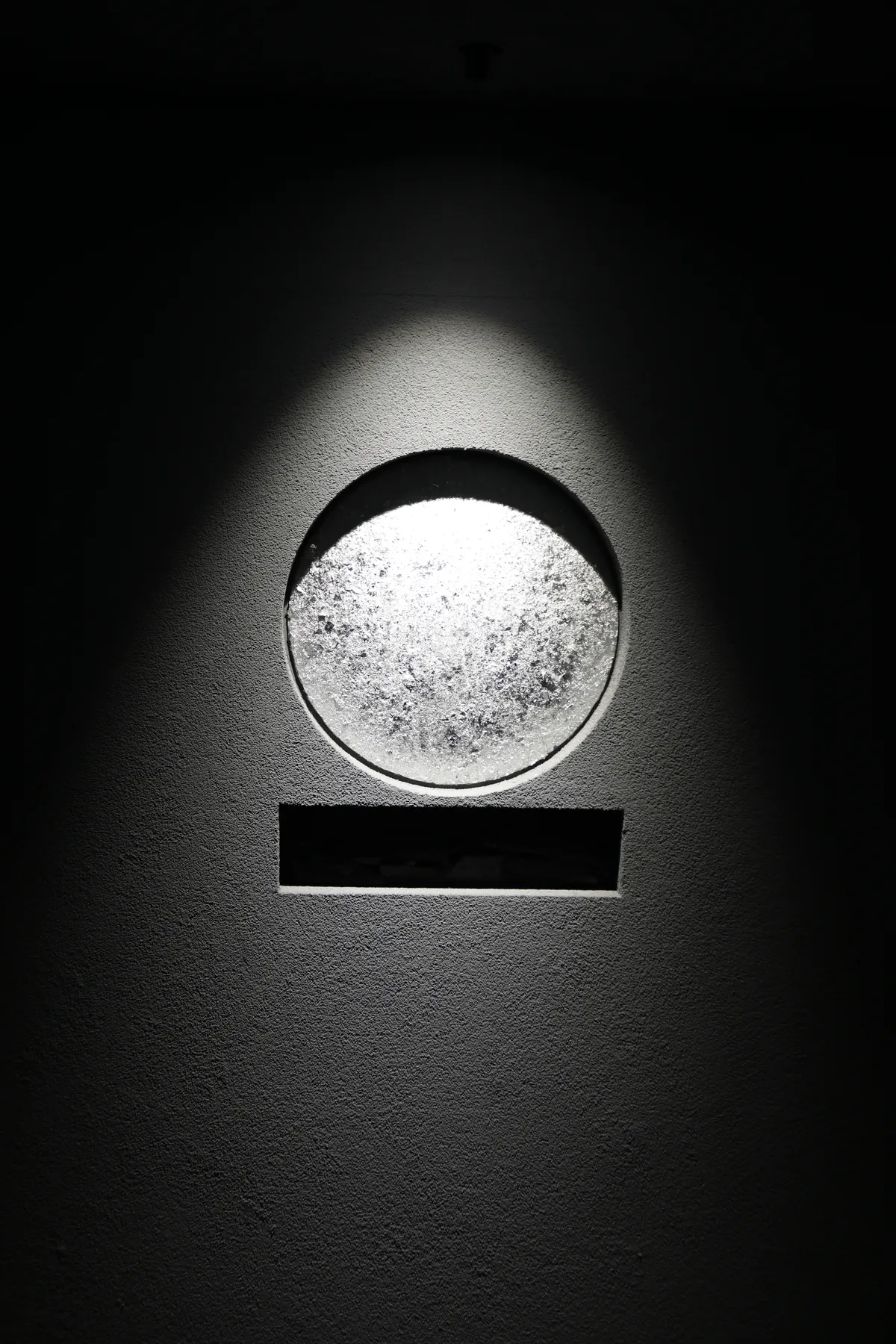
A plate that begins with charcoal
Every dish at SUTIMOON begins with the slow fire of charcoal. Its warmth and aroma, drawn out over time, awaken the depth of each ingredient and leave a quiet flavour and a lingering echo. Like moonlight breaking gently through the dark, dishes shaped through layered techniques rise from the embers with a harmony of their own.
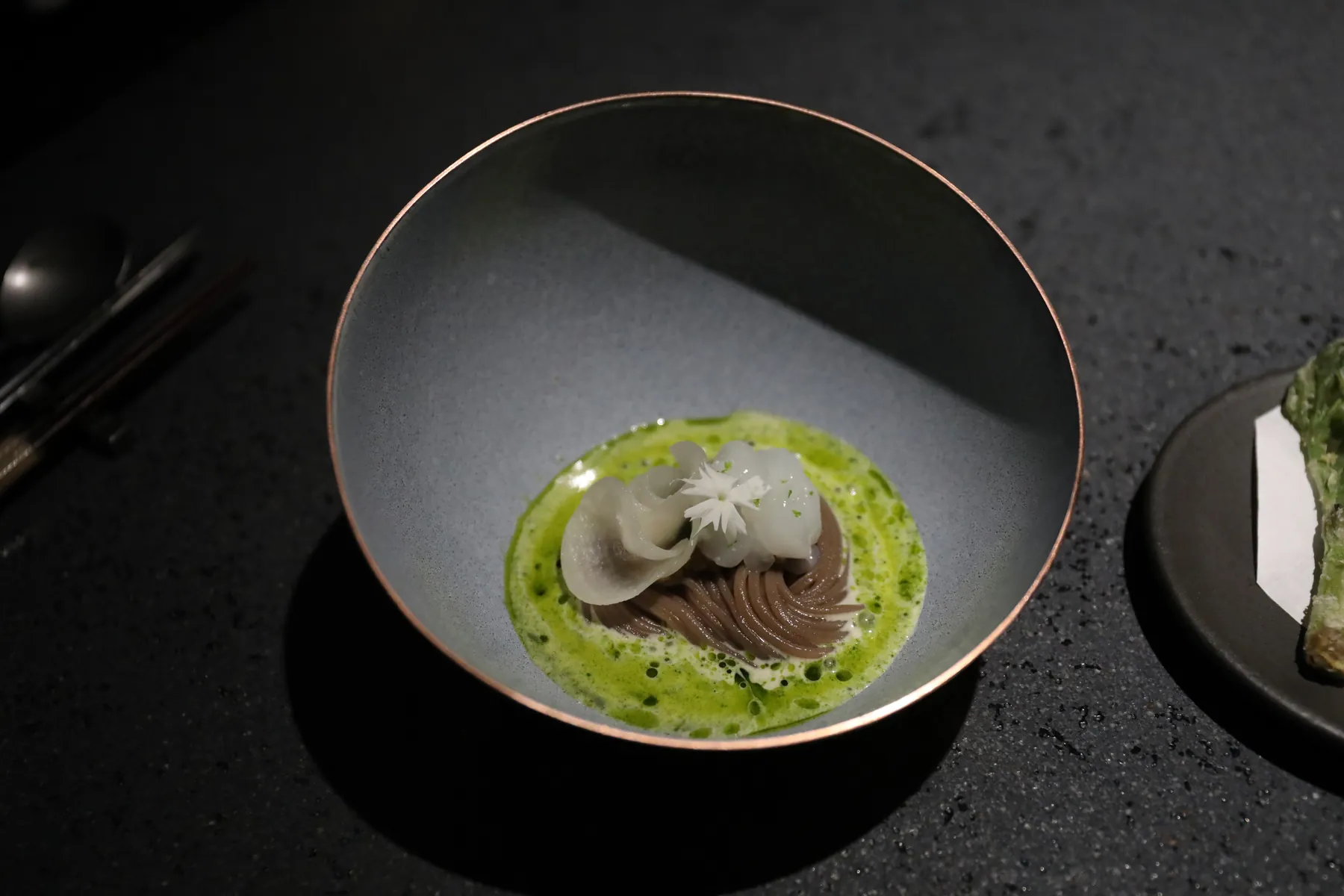
A bowl drawn from the royal annals
Dotori guksu takes its story from a record in the Sillok ordering acorns from the mountains to be ground into flour and distributed to the starving. Acorn noodles in perilla-oil broth, finished with gamtae seaweed oil, Jeju bracken pesto and raw bigfin reef squid — ingredients of land and sea meeting in one bowl.
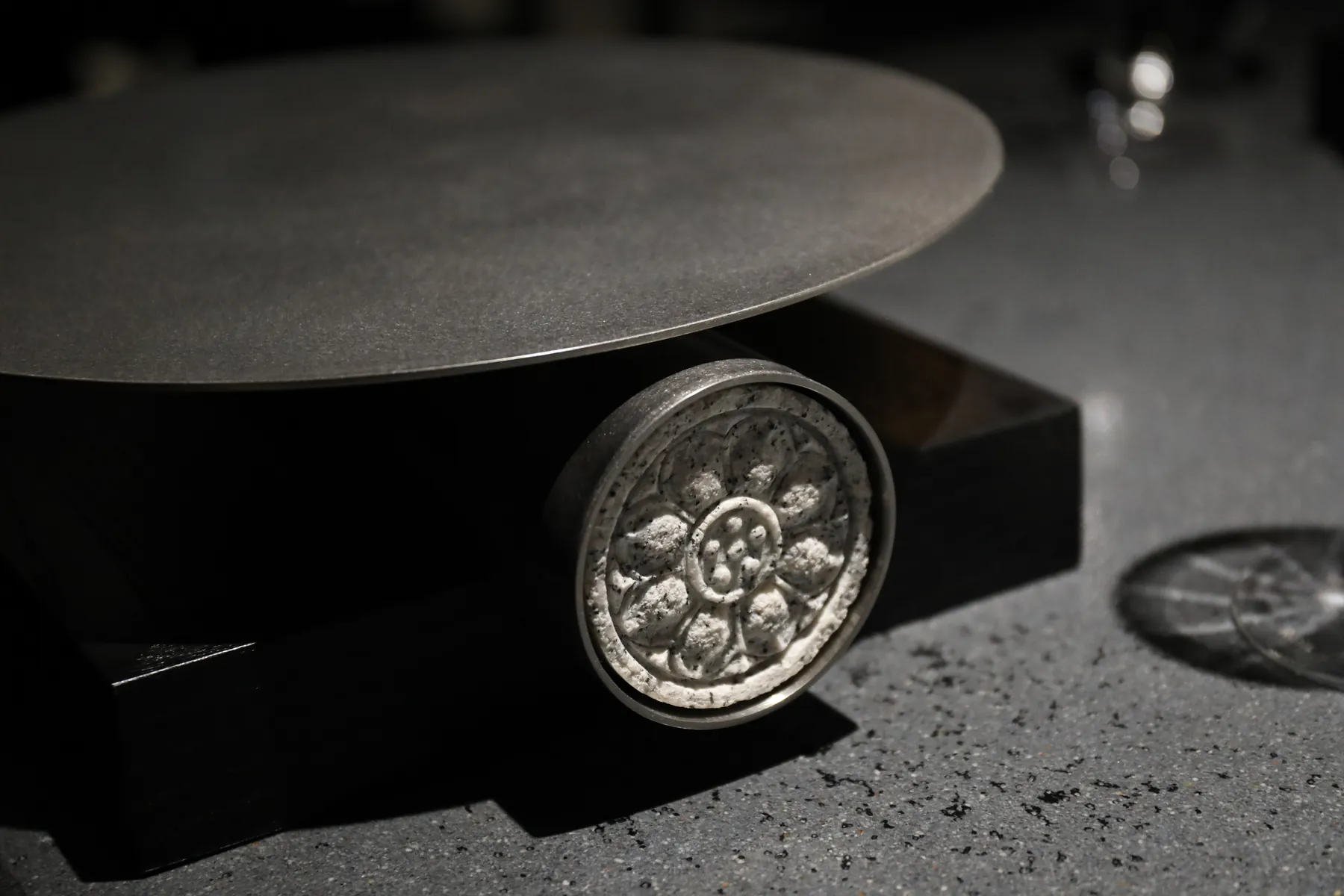
相生 — a table of mutual growth
It begins with relationships where both people and food can be sustained. SUTIMOON completes each table with carefully selected ingredients and the delicate hands of Korean craft artists. The first plate, Samichochan, is served on “Gwol” by woodcraft artist Lee Jeonghoon.